
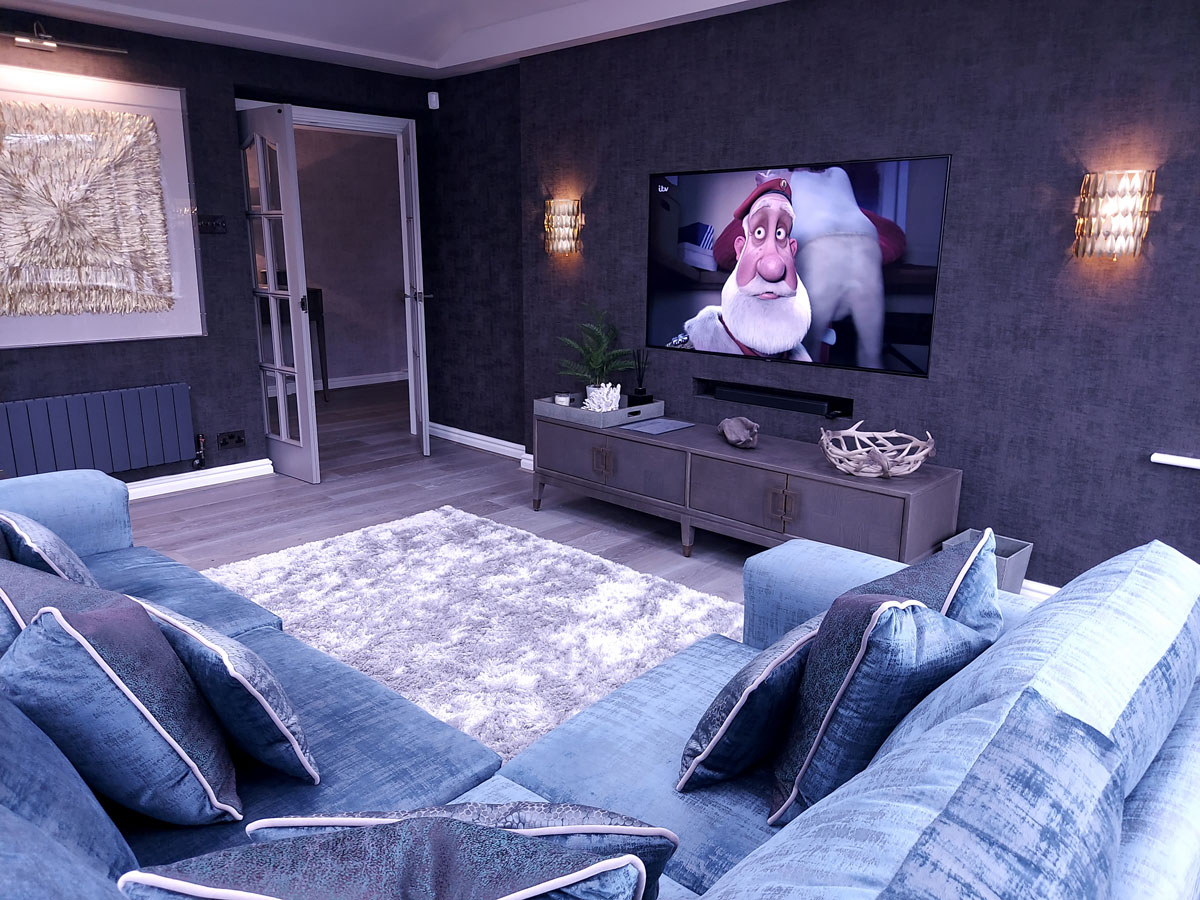
A home cinema done properly is genuinely transformative. A room that delivers cinema-quality picture, immersive surround sound, and comfortable viewing — where everything works at the touch of a button and nothing looks out of place in your home. Done poorly, it’s an expensive disappointment.
This guide covers everything you need to know before you invest: what a home cinema system actually involves, what affects the cost, and the most important things to get right.
What does a home cinema system include?
A home cinema is more than a large television and a soundbar. A properly designed system typically includes:
- Display technology — either a large-format screen (85”+) or a projector and screen combination, depending on the room dimensions and light levels
- Surround sound — typically a 5.1, 5.2, 7.1, or 7.2 configuration, meaning five or seven speakers placed around the room plus one or two subwoofers for bass
- An AV receiver or processor — the brain of the system that manages audio decoding and routing
- A media source — streaming devices, 4K Blu-ray players, gaming consoles, or a centralised media server
- Control system — a single remote or touchscreen interface that controls the entire room, including lighting
- Room treatment — acoustic panels or specialist materials that manage sound reflections and improve audio quality
- Structured cabling — all the wiring that connects the system, ideally hidden within the walls, floor, or ceiling
What makes the difference between a good home cinema and a great one?
The gap between a home cinema that looks impressive and one that genuinely performs comes down to three things: equipment quality, room design, and installation precision.
Equipment quality matters enormously. The components you choose — the speakers, the receiver, the display — determine the ceiling of what’s possible. A great installer cannot make cheap equipment perform beyond its limits. Conversely, premium equipment installed poorly will also disappoint.
Room design is often underestimated. The dimensions of the room, the materials on the walls, floor, and ceiling, the position of the screen relative to seating — all of these affect how sound behaves in the space. A specialist will design around the room, not just drop equipment into it.
Installation precision determines whether everything performs as it should. Speaker positioning and angle, subwoofer placement, cable quality, system calibration — these are the details that separate a professionally installed system from a DIY setup that looks similar but sounds entirely different.
The most common mistake homeowners make is buying excellent equipment and installing it themselves, or having it installed without specialist knowledge. The result is a system that underperforms — often significantly.
How much does a home cinema cost?
Home cinema costs vary significantly depending on the size of the room, the equipment specified, and the level of integration required. As a general guide:
- Entry-level dedicated cinema room (5.1 surround, quality mid-range equipment, professional installation): £8,000 – £15,000
- Mid-range system (7.1 or 7.2 surround, premium brands, acoustic treatment, concealed cabling, lighting control): £15,000 – £35,000
- High-end installation (reference-quality equipment, full room acoustic design, bespoke cabinetry, automation integration): £35,000+
The most significant variables are the display technology (projectors and screens at this level vary enormously in price), the speaker brands specified, and the degree of room modification required — including whether cabling needs to be concealed within finished walls.
What about media walls and living room AV?
Not every homeowner wants a dedicated cinema room. Media walls and integrated living room AV systems offer a compelling alternative — combining a large-format screen, a carefully concealed speaker system, and ambient lighting control into the main living space.
Done well, a media wall is a design feature as much as a technology installation. The key is working with an installer who takes the aesthetic as seriously as the acoustics — planning cabling routes, speaker concealment, and equipment housing before any walls are finished.
The questions to ask before you choose an installer
The quality of your home cinema installation depends almost entirely on the specialist you choose. Before committing, ask:
- What brands do you work with, and why do you recommend them?
- Can I see examples of previous installations at a similar level?
- How do you approach speaker calibration and room acoustics?
- How will cabling be managed — and at what stage of the build does the pre-wiring need to happen?
- What does ongoing support look like after installation?
A good installer will welcome these questions. The answers will tell you quickly whether they have genuine expertise or are simply reselling equipment.
Home cinema installation across the northwest
AVIS AV specialises in high-end residential AV across the M62 corridor, working with homeowners in Cheshire, Greater Manchester, and West Yorkshire who want a genuinely exceptional result.
We work with premium AV manufacturers, take as much pride in the installation quality as the equipment, and stay involved long after your system is up and running. If you’re in the early stages of planning, we’re happy to have an informal conversation about what’s possible for your space and your budget — with no obligation.
Planning a home cinema or media wall? Talk to the AVIS AV team. We offer a free initial consultation and can advise from early design stage through to completion.
AVIS AV — AV Made Simple. Installed Right. Supported Long After.